Defibrillator and AED Buying Guide Ireland
An automated external defibrillator, or AED, is the one piece of safety equipment that can directly restart a life. When someone suffers a sudden cardiac arrest, their chance of survival falls with every minute that passes before defibrillation. The right device in the right place, kept ready, matters far more than any single feature on a specification sheet.
This guide is for Irish workplaces, schools, sports clubs, community groups and healthcare settings weighing up an AED purchase. It explains the choices that actually matter: semi-automatic or fully automatic, which features earn their keep, where to put the device, and how to keep it rescue ready year after year.
safetyequipment.ie is owned and operated by Phoenix STS, the fire safety and health and safety consultancy and training provider, and distributes ZOLL defibrillators in Ireland. The same team supplies the device and delivers the training to use it.
What does Irish law say about defibrillators?
There is no general law ordering every Irish workplace to install an AED. The Safety, Health and Welfare at Work Act 2005 requires employers to assess risks, plan for emergencies and provide the equipment those plans need. In plain English, if cardiac arrest is a foreseeable emergency at your site, you should be able to show how your people would respond in the minutes before an ambulance arrives, and an AED is usually part of that answer.
No regulator endorses any particular brand or model. Suitability comes from your own assessment of who is on site, how far you are from emergency services, and who would respond first.
Semi-automatic or fully automatic: which should you choose?
A semi-automatic AED analyses the heart rhythm and, if a shock is needed, tells the rescuer to press a button to deliver it. A fully automatic AED delivers the shock itself after a spoken warning, with no button press. Neither type will shock a person who does not need it.
Fully automatic devices suit settings where the likely rescuer is an untrained bystander who may hesitate at the moment of decision. Semi-automatic devices suit sites with trained responders who want control of the moment of shock. We supply both versions of each model, for example the ZOLL AED 3 Semi-Automatic and the ZOLL AED 3 Fully-Automatic, so the decision is about your responders, not the catalogue.
Which AED features actually matter?
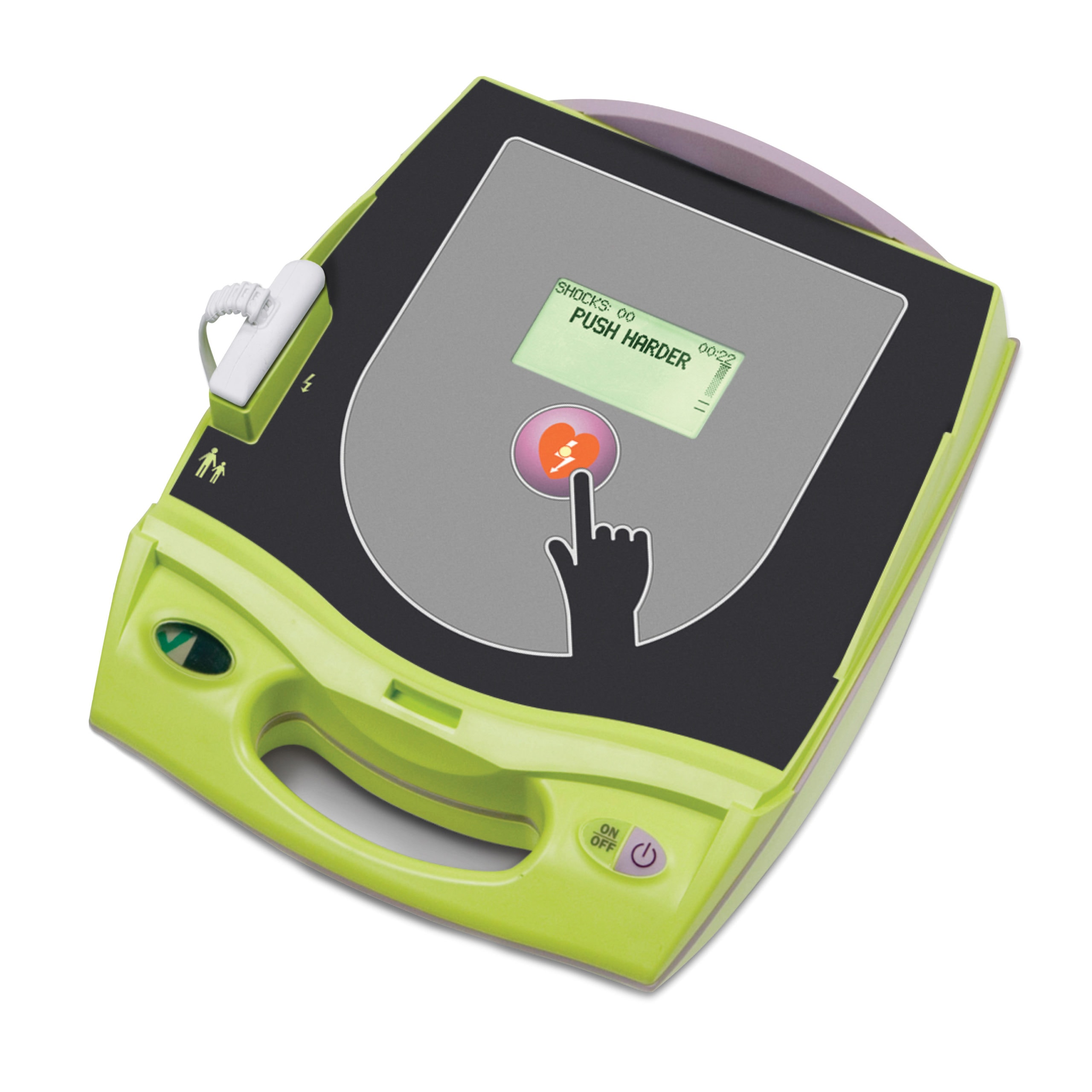
CPR feedback. Good chest compressions matter as much as the shock itself. The ZOLL AED 3 and ZOLL AED Plus include Real CPR Help, which measures the rate and depth of compressions and coaches the rescuer in real time. The Powerheart G5 offers Intellisense CPR feedback with RescueCoach voice and text prompts.
Self-testing. The Powerheart G3 and G5 run automatic self-tests and manage their batteries with Intellisense technology, and the G5 carries an eight-year warranty. A device that checks itself daily is far less likely to fail on the one day it is needed.
Clear guidance under stress. The ZOLL AED 3 adds a full-colour touchscreen with audio and visual prompts that walk a rescuer through the entire resuscitation, and it is designed for trained responders and lay rescuers alike. The ZOLL AED Plus uses a one-piece electrode pad that simplifies pad placement for occasional responders.
Which AED models does Safety Equipment Ireland supply?
We supply the ZOLL AED 3 and ZOLL AED Plus families and the Powerheart G3 and G5 ranges, each in semi-automatic and fully automatic versions, along with pads, batteries, cabinets, signage, carry cases and trainer units. Browse the full Defibrillators Ireland category or our ZOLL defibrillators overview page to compare the ranges.
Where should you put an AED?
Somewhere central, visible and never locked away. A device in a manager's office behind a keypad protects the asset and loses the patient. Mount it on a wall bracket or in a cabinet on a main circulation route, mark it with AED wall signs, and tell everyone on site where it is.
For outdoor or community access, use a heated outdoor cabinet such as the AIVIA 200 heated outdoor cabinet, which protects the device from cold and damp and includes an alarm. Indoors, a surface mount wall cabinet keeps the device prominent, with alarmed and strobe versions available where interference is a concern.
How many AEDs does your site need?
Work backwards from response time. The aim is to get a device to a collapsed person, anywhere on the site, within a couple of minutes of the alarm being raised. On a single open floor one well-signed device may do. A multi-storey building, a long warehouse or a campus of separate buildings usually needs more than one, because stairs, distance and locked doors all eat into the time.
Mobile teams change the answer again. Sports clubs covering large pitches, security teams and event crews often pair a wall-mounted device with an AED rescue backpack or a hard-sided waterproof carry case, so the device travels to where people actually are. If you are unsure, describe the site in your enquiry and we will talk the coverage through with you before quoting.
How do you keep an AED rescue ready?
Name an owner. One named person should check the device's readiness indicator on a regular schedule and log the check. Modern AEDs self-test, but someone still has to look at the result.
Diary the consumables. Electrode pads expire: the CPR Uni-padz for the ZOLL AED 3, for example, carry a five-year shelf life, and replacement battery packs are available for each model. Record the expiry dates on the day the device is installed and order replacements before they fall due.
For organisations with several devices or remote sites, an AED status monitoring unit with 4G communication reports readiness, location and openings centrally, which removes the dependence on local checks.
Do you need paediatric pads?
If children are regularly on site, in schools, clubs, pools or childcare, include them in your assessment. The ZOLL AED 3 works with universal adult and paediatric electrodes, and paediatric defibrillation pads are available for the Powerheart G3 and G5. Decide this at purchase time so the right pads are in the cabinet from day one.
What about AED trainers and staff training?
AEDs are designed so an untrained bystander can use them, but trained staff respond faster, place pads correctly and deliver better compressions. Dedicated trainer units such as the ZOLL AED 3 Trainer let staff practise realistic rescues without touching the live device. A trainer delivers no shock, so never buy one in place of a live AED.
Phoenix STS delivers the HeartSaver AED course and the combined First Aid and HeartSaver AED course so your responders are confident before the device is ever needed.
What are the most common buying mistakes?
Locking the device away, letting pads expire unnoticed, skipping signage, and buying the device with no plan for who responds. Each is cheap to avoid at purchase time and expensive to discover during a rescue.
The other mistake is siting an outdoor device in an unheated box. Irish winters are mild but cold snaps are not rare, and electrode gel and batteries dislike frost. If the device lives outside, buy the heated cabinet with it.
Defibrillator and AED FAQs
Is an AED a legal requirement in Irish workplaces?
There is no blanket legal requirement. The Safety, Health and Welfare at Work Act 2005 requires employers to plan and equip for foreseeable emergencies, so the real question is whether your own risk assessment can justify not having one.
Can an untrained person use an AED?
Yes. Every model we supply guides the rescuer with voice prompts and will only deliver a shock when its analysis says one is needed. Training still improves speed and CPR quality, which is why we recommend pairing the device with a course.
Should we buy semi-automatic or fully automatic?
Choose fully automatic where the first responder is likely to be an untrained bystander, and semi-automatic where trained responders want control of the shock decision. Both are available across the ZOLL AED 3, AED Plus and Powerheart ranges.
How often do pads and batteries need replacing?
Pads carry a printed expiry, for example a five-year shelf life on CPR Uni-padz for the AED 3, and batteries are replaced per the model's schedule or when the self-test flags them. Log both dates at installation and check the readiness indicator routinely.
Where should an AED be mounted?
On a main circulation route, clearly signed, never behind a lock during occupied hours. Outdoor community devices belong in a heated, alarmed cabinet so they stay rescue ready in winter.
What should an AED quotation include?
The model and whether it is semi or fully automatic, the cabinet or bracket, wall signage, spare pads including paediatric if needed, any trainer units, and the number of sites. Multi-site orders should say so, because monitoring options change the recommendation.
How do you request a quotation?
Every product on this site is supplied on an enquiry basis. Use the Request a Quote button on any product page, call 043 3349611 or email [email protected] with the details above. Our quotation FAQ explains how the process works, or you can send your requirements through the contact page.
Everything AED in one place
For the full picture - equipment, placement advice, replacement pads and batteries, and Heartsaver AED training - see our AEDs and Defibrillators in Ireland hub. Advice from our fire engineers and health and safety consultants comes before any sale, and it is free.