Early Defibrillation in Ireland: What the Evidence Says
Before buying a defibrillator, it is worth understanding why minutes matter. Ireland has one of Europe's most complete cardiac arrest registries - the Out-of-Hospital Cardiac Arrest Register (OHCAR), hosted by the HSE National Ambulance Service - and its data, together with peer-reviewed analysis of it, makes the case for public access defibrillation better than any sales copy could.
The Irish numbers
OHCAR's 2022 annual report recorded 2,802 out-of-hospital cardiac arrests in Ireland where resuscitation was attempted. Of those, 206 people - 7.3% - survived to leave hospital. But where a member of the public delivered defibrillation before the ambulance arrived, the picture changed entirely: 282 patients were defibrillated by bystanders or community first responders, and 87 of them survived - a survival rate of 31%, more than four times the overall figure. Most arrests (69%) happened in the home.
Peer-reviewed analysis of the register tells the same story with statistical rigour. Barry and colleagues examined 3,092 witnessed, shockable-rhythm arrests in Ireland between 2012 and 2020, published in Resuscitation Plus in 2024: bystander defibrillation was associated with a 78% increase in the adjusted odds of survival to hospital discharge, and bystander CPR with a 57% increase. Analysis of the 2019 register by the Irish Heart Foundation noted that 18% of people who collapsed in a public location survived, against 4% in private locations - location, witnesses and rapid access to a defibrillator are what separate the two.
What this means when you are choosing equipment
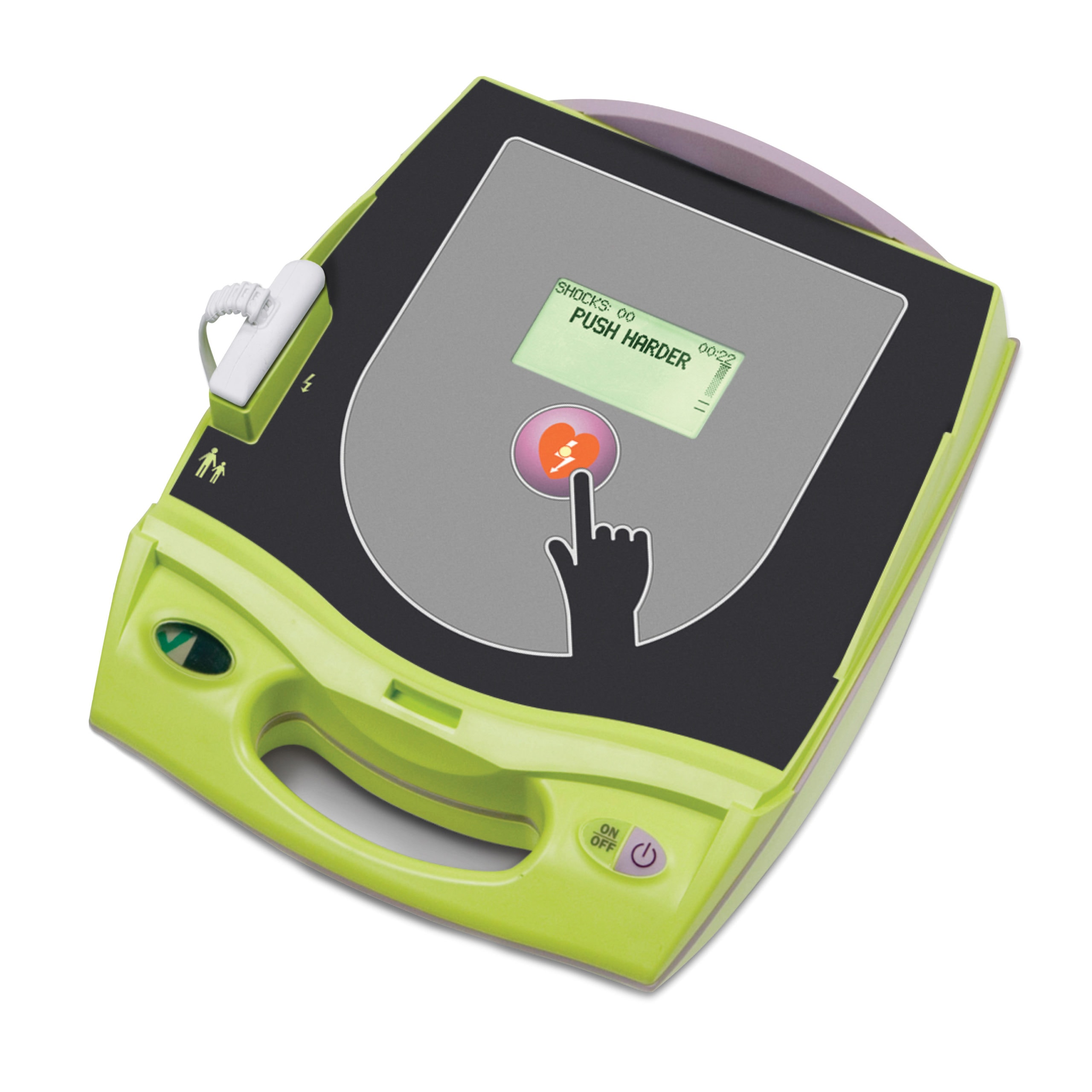
The evidence points to time-to-shock as the variable you control. A defibrillator that is well sited, signed, maintained and backed by staff who will actually use it shortens that time; one locked in an office, with expired pads, does not. That is why our guidance runs wider than the unit itself: the Defibrillator and AED Buying Guide for Ireland covers selection, the pads and batteries replacement guide covers readiness, and the AED hub ties equipment, placement and governance together. The ZOLL range we supply provides real-time CPR feedback - directly relevant given the register's evidence on bystander CPR quality.
Training completes the chain
Every statistic above involves a person acting before the professionals arrive. Through Phoenix STS we deliver the Heartsaver AED course and the PHECC First Aid Response (FAR) course - the same company advising on the equipment trains the people who will use it.
References
OHCAR Annual Report 2022 - HSE National Ambulance Service · Barry T. et al. (2024), Resuscitation Plus - bystander CPR, defibrillation and survival, Ireland 2012-2020 · Irish Heart Foundation - OHCAR 2019 annual report summary
Reviewed by the Phoenix STS technical team - fire engineers and health and safety consultants, led by Paddy McDonnell BEng CMIOSH. Advice before any sale is our standing policy, and it is free: talk to the team.