Choosing Evacuation Equipment for Nursing Homes: A Regulatory and Practical Guide
Regulation 28 of the Health Act 2007 (Care and Welfare of Residents in Designated Centres for Older People) Regulations 2013 is direct. The registered provider must make adequate arrangements for evacuating all residents, including residents with high dependency. Staff must be trained in those arrangements. HIQA's National Standards for Residential Care Settings for Older People in Ireland frame the same duty from the inspection side. The Fire Services Acts 1981 and 2003 frame it from the fire authority side. So the question for management is not whether to hold evacuation equipment. It is which equipment matches which resident - and whether night staffing can operate it.
Match the equipment to the resident, not the brochure
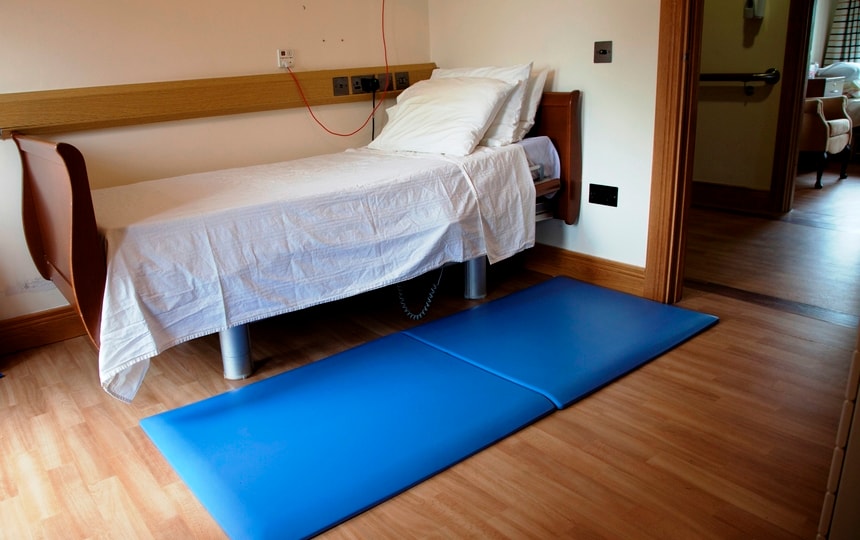
Progressive horizontal evacuation is the operating principle in Irish residential care. Residents move to an adjoining fire compartment, not out of the building. Equipment choice follows dependency. Ambulant and assisted residents on upper floors call for evacuation chairs. Bed-bound and high-dependency residents call for evacuation sheets and mattresses, which move the person on or with their mattress - no lifting. Residents who have fallen, or who must be moved in confined spaces, call for transfer slings. Bariatric residents need specific planning. Standard working-load limits fail at higher weights, and so do standard staffing assumptions. That is why the bariatric equipment range exists as its own category. A dependency profile of your residents, mapped against compartment boundaries and night staffing, tells you the equipment schedule. A catalogue does not.
The questions we ask before recommending anything
How many staff are on duty at night? Can each item be operated by the staff actually present? Where will equipment be stored, so it sits at the point of use rather than in a locked store two corridors away? Which residents' personal emergency evacuation plans depend on which item? And what does the training cycle look like - because under Regulation 28, arrangements include staff being trained in them. If a lower-cost configuration meets the need, management will be advised of that. If equipment alone is not the answer, management will be advised of that too.
Training and assurance from the same source
Phoenix STS consultants carry out fire safety work in more than 85 Irish nursing homes. Through Phoenix STS we deliver the Evacuation Equipment Training course, the Evacuation Chair Training course, the Certified Healthcare Evacuation Equipment Instructor course, and compartment fire evacuation drills. We also develop PEEPs and carry out fire risk assessments.
References
Health Act 2007 (Care and Welfare of Residents in Designated Centres for Older People) Regulations 2013 (S.I. No. 415 of 2013), Regulation 28 - Fire Precautions · HIQA, National Standards for Residential Care Settings for Older People in Ireland · Fire Services Acts 1981 and 2003 · Safety, Health and Welfare at Work Act 2005
Reviewed by the Phoenix STS technical team - fire engineers and health and safety consultants, led by Paddy McDonnell BEng CMIOSH. Advice before any sale is our standing policy, and it is free: talk to the team.