Fire Door Holder Buying Guide Ireland
Fire door holder selection depends on the door location, building setting, activation method and how the product will be installed and maintained.
Use this guide to gather the building, door-count, product and quotation details before selecting fire door holders or related accessories. It also answers the question behind most enquiries: why a wedge under a fire door is not a lawful answer to a door everyone wants kept open, and what to fit instead.
Can you wedge a fire door open in Ireland?
No. A fire door only works closed. Its job is to hold back smoke and flame long enough for people to get out and for the fire to be contained where it started. A wedged door cannot close when fire breaks out, so smoke spreads into corridors and stairways, which are exactly the routes people need to escape.
Under the Fire Services Acts 1981 and 2003, the person having control of a premises has a general duty to take reasonable measures to guard against the outbreak of fire and to provide for the safety of people on the premises if fire occurs. Keeping escape routes usable sits at the heart of that duty, and a wedged fire door undermines it. In plain terms: if a propped-open fire door lets smoke into an escape route during a fire, the person in control of the building is answerable for that failure.
In residential care settings the expectation is more specific again. Regulation 28 of S.I. No. 415 of 2013 requires registered providers of designated centres, such as nursing homes, to take adequate precautions against the risk of fire and to make adequate arrangements for evacuating residents. In plain terms: a wedged fire door in a nursing home is a fire precaution that has been switched off, and the provider will be expected to put it right.
None of this means doors must stay shut all day. The compliant route is a hold-open device, also called a fire door retainer, which holds the door open during normal use and releases it to close the moment the fire alarm sounds.
Why fire doors end up wedged
Doors get wedged for understandable reasons: trolleys and deliveries moving through, ventilation on warm days, residents or pupils who cannot manage a heavy door, and staff tired of a door slamming behind them. A retainer answers every one of those needs without disabling the door. The wedge solves a convenience problem by creating a life safety one.
Types of fire door holder
The Fireco range distributed in Ireland by Safety Equipment Ireland covers two approaches: acoustic devices that listen for the fire alarm, and radio-linked devices controlled by a hub wired to the fire alarm panel.
Acoustic, sound-activated retainers
Acoustic retainers are self-contained, battery-powered units that release the door when they hear the fire alarm. Dorgard, the original fire door retainer, fits to the bottom of the door in under five minutes and releases when it hears a continuous fire alarm of 14 seconds or more. DorMag SmartSound is a wireless fire door magnet that uses sound recognition technology to pick the alarm out from everyday noise, and suits areas with uneven floors or anywhere a discreet hold-open option is wanted.
Because no wiring is involved, acoustic devices are the quickest retrofit option for single doors, smaller buildings and rented premises.
Radio-linked, panel-connected systems
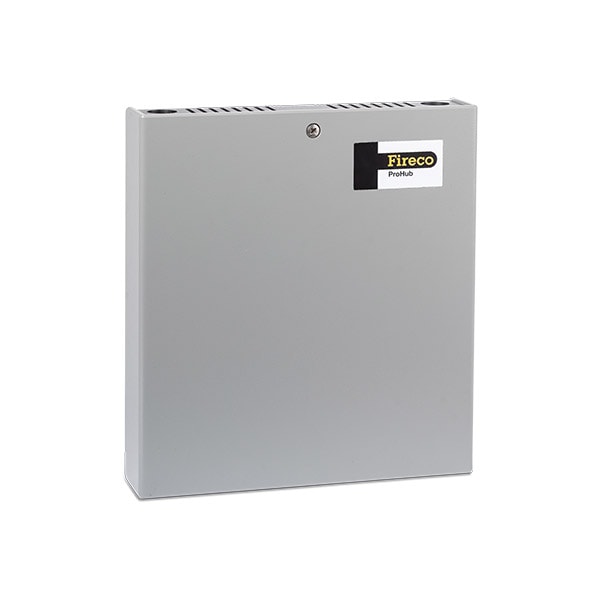
For larger or noisier buildings, the Pro range works by radio rather than sound. Dorgard Pro retainers and DorMag Pro door magnets are controlled by ProHub, a central controller wired directly to the fire alarm panel. When the panel activates, ProHub signals every device to release, so background noise has no bearing on activation. ProHub also checks the status of all connected units and links to Fireco's Site Manager software for remote monitoring.
Radio-linked systems suit high-risk zones such as corridors, stairwells and kitchens, multi-door estates, and healthcare settings where management wants central confirmation that every held-open door released.
Which type should you choose?
As a working rule: choose acoustic devices for retrofit jobs, single doors and quieter buildings; choose the ProHub-based Pro range where doors sit in noisy areas, where there are many doors to manage, or where a monitored, panel-connected system is preferred for compliance records. Both approaches hold the door legally and close it on alarm. The difference is how the alarm signal reaches the device and how much oversight you get.
Choosing by building type
Nursing homes and healthcare
Care settings live with the tension between fire compartmentation and residents who need doors open: for orientation, for airflow, for hoists and trolleys, and because a heavy door defeats a walking frame. Retainers on bedroom and corridor doors resolve that tension, and the monitored Pro range gives the person in charge a record that every door released on alarm, which is useful evidence when inspection asks how fire precautions are maintained.
Schools and colleges
Class changeover traffic is the classic reason school fire doors get wedged. Acoustic retainers on circulation doors keep movement flowing between classes and put the doors back to work the moment the alarm sounds. They also remove the daily argument about who took the wedge.
Offices, hotels and commercial buildings
In offices the wedge usually appears at kitchens, print rooms and stairwell doors. Kitchens and plant areas are noisy, so they are strong candidates for the radio-linked Pro range, while quieter corridor doors can take acoustic units. Hotels and guest accommodation should think about night-time conditions: doors held open for housekeeping during the day still need to close reliably when the building is asleep.
Installation, testing and maintenance
Whichever device you fit, build it into the building's fire safety routine. Include held-open doors in the weekly fire alarm test and confirm each device releases and the door closes fully into its frame. Replace batteries as the manufacturer directs, and keep door closers, hinges and seals in working order, because a retainer can only close a door that is free to close.
Acoustic units such as Dorgard and DorMag SmartSound are battery powered and need no wiring, so in-house maintenance staff can fit them. A ProHub-based system involves wiring the hub to the fire alarm panel, which is normally done alongside your fire alarm contractor. Either way, record the devices in the fire safety register so testing and battery changes are logged with the rest of the building's precautions.
Useful product links
Fire Door Holders Ireland - category page.
Fireco Fire Door Holders - manufacturer page.
Example products
Dorgard - the original acoustic fire door retainer, fitted to the bottom of the door.
Dorgard Pro - retainer for high-risk zones, controlled by ProHub from the fire alarm panel.
DorMag SmartSound - wireless listening fire door magnet with sound recognition.
DorMag Pro - wireless fire door magnet, radio activated through ProHub.
ProHub - central controller that wires into the fire alarm panel and manages the Pro range.
Fire door holder FAQs
Can I wedge a fire door open instead of fitting a holder?
No. A wedge stops the door closing in a fire, which defeats the door and undermines the duty under the Fire Services Acts 1981 and 2003 to provide for the safety of people in the building. A retainer gives you the same open door during the day and releases it when the alarm sounds.
How does an acoustic fire door retainer know the alarm is sounding?
It listens. Dorgard releases when it hears a continuous fire alarm of 14 seconds or more, and DorMag SmartSound uses sound recognition to tell the fire alarm apart from everyday noise. No wiring to the panel is needed.
What about noisy areas such as kitchens?
Use the radio-linked Pro range. Dorgard Pro and DorMag Pro are activated by ProHub, which is wired directly to the fire alarm panel, so they release on the panel's signal regardless of background noise.
Are battery-powered fire door holders suitable for nursing homes?
Hold-open devices are widely used in residential care because they let doors stay open for residents while restoring the door's protection on alarm. The provider still needs to show the devices are maintained and that doors release when the alarm sounds, in keeping with the fire precautions duty under Regulation 28 of S.I. No. 415 of 2013. For multi-door healthcare buildings, the monitored ProHub system makes that evidence easier to produce.
How many fire door holders do I need?
Walk the building and list every fire door that is routinely found open or wedged: those are the doors that need retainers, because the wedging habit will not stop on its own. Doors that stay closed in normal use can simply stay closed. A door schedule listing location, door type and noise level lets us match acoustic and radio-linked devices door by door in one quotation.
Do fire door retainers need an electrician to install?
The acoustic units do not. Dorgard fits to the bottom of the door in under five minutes and DorMag SmartSound is a battery-powered wireless magnet, so no wiring is involved. The Pro range needs its ProHub controller wired to the fire alarm panel, which is typically arranged with your fire alarm contractor; the door units themselves remain wireless.
What details help with a fire door holder quote?
Include the product name if known, door count, building type, delivery location and any installation notes.
Training and inspection support
safetyequipment.ie is owned and operated by Phoenix STS, the fire safety and health and safety consultancy and training provider. If your team also needs to manage fire doors day to day, Phoenix STS runs fire warden training covering means of escape and daily checks, and a fire door inspection course for staff responsible for fire door condition.
Quotation checklist
When requesting a quotation, include the product name or SKU, quantity, delivery location, user environment, required accessories and any relevant compliance or training needs.